English
- English
- Español
- Português
- русский
- Français
- 日本語
- Deutsch
- tiếng Việt
- Italiano
- Nederlands
- ภาษาไทย
- Polski
- 한국어
- Svenska
- magyar
- Malay
- বাংলা ভাষার
- Dansk
- Suomi
- हिन्दी
- Pilipino
- Türkçe
- Gaeilge
- العربية
- Indonesia
- Norsk
- تمل
- český
- ελληνικά
- український
- Javanese
- فارسی
- தமிழ்
- తెలుగు
- नेपाली
- Burmese
- български
- ລາວ
- Latine
- Қазақша
- Euskal
- Azərbaycan
- Slovenský jazyk
- Македонски
- Lietuvos
- Eesti Keel
- Română
- Slovenski
- मराठी
- Srpski језик

News
How to Choose the Right Chamber Filter Press for Your Industrial Application?
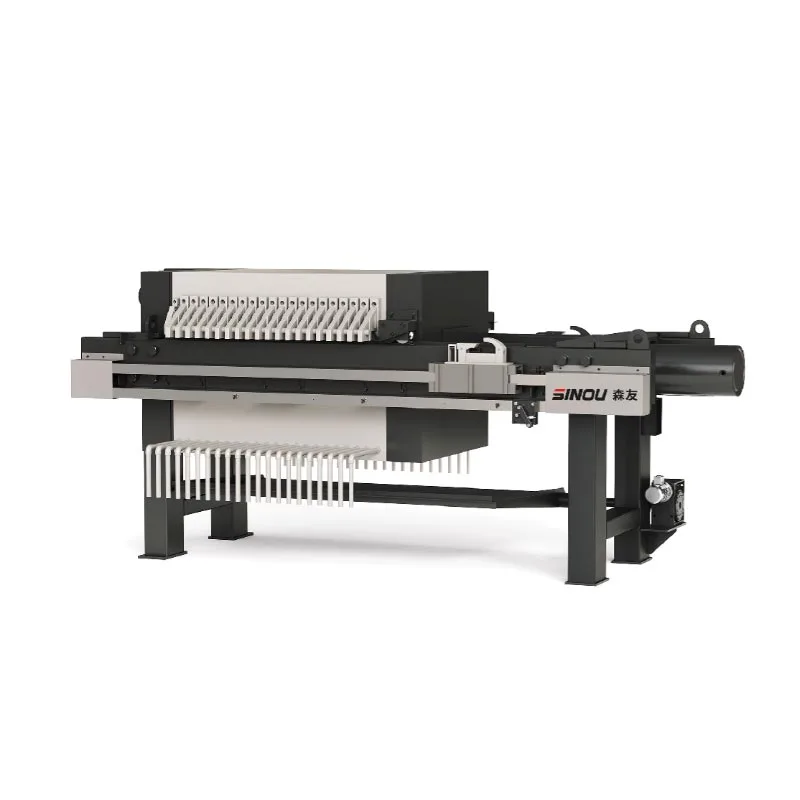
Selecting a chamber filter press is a high-stakes procurement decision that impacts dewatering efficiency, operating costs, and regulatory compliance. This guide covers everything from technical specifications and cloth selection to automation levels, maintenance, and supplier evaluation — with a clear comparison of advantages and limitations. Whether you are in municipal wastewater, chemical processing, or mining, this article delivers a structured pathway to the optimal chamber filter press investment.
📑 Table of Contents
- 1. How Does a Chamber Filter Press Work?
- 2. How to Match Key Specs to Your Needs?
- 3. How Does Filter Cloth Selection Impact Performance?
- 4. How to Decide Automation Level?
- 5. What Are the Pros and Cons?
- 6. How to Maintain for Longevity?
- 7. How to Evaluate a Reliable Supplier?
- 8. Frequently Asked Questions
1. How Does a Chamber Filter Press Work?
A chamber filter press (also called recessed chamber filter press) operates on a simple but highly effective principle: a series of filter plates with recessed chambers are pressed together under high hydraulic or mechanical force. Slurry is fed into the chambers under pressure (typically 8–15 bar). Liquid passes through the filter cloth, while solids accumulate and form a dense filter cake. Once chambers are full, feeding stops, the press opens, and the cake is discharged. This batch process is widely used for sludge dewatering in wastewater treatment, mining, chemical, and food industries. The core advantage? It delivers one of the driest cakes among mechanical dewatering methods.
2. How to Match Key Specs to Your Needs?
Choosing the right chamber filter press starts with understanding your process volume and solid content. The filtration area (m²) and chamber volume directly determine throughput per cycle.
| Model / Frame | Filtration area (m²) | Typical application scale |
| 630–800 | 10–60 | Small to medium plants, pilot lines |
| 1000–1250 | 80–250 | Municipal WWTP, chemical plants |
| 1500–2000 | 300–1000+ | Large mining, power, industrial parks |
pro tip Always calculate daily dry solids (TDS) and multiply by expected cake solids (25–45%) to estimate required chamber volume. Zhejiang Sinou Environmental Protection Equipment Co., Ltd. offers customized sizing based on your slurry characteristics.
3. How Does Filter Cloth Selection Impact Performance?
The filter cloth is the heart of the filtration process. Wrong cloth choice leads to blind blinding, high moisture, or solids breakthrough.
- Polyester (PET): Excellent acid/alkali resistance, up to 130°C, ideal for chemical and municipal sludge.
- Polypropylene (PP): Good resistance to weak acids/alkali, up to 90°C, cost-effective for food and light industry.
Key metrics: air permeability (L/min·dm² @ 200 Pa) and mesh count. Higher permeability speeds filtration but may reduce clarity. Always test with actual slurry. Suppliers like Zhejiang Sinou Environmental Protection Equipment Co., Ltd. provide cloth samples for on-site trials.
4. How to Decide Automation Level?
Automation is a major cost and efficiency lever. Options range from manual (hand-wheel) to fully automatic with plate shifting, cloth washing, and PLC control.
| Automation type | Best for | Labor impact |
| Manual (handwheel) | Small batch, infrequent use | High operator involvement |
| Semi-automatic (hydraulic closing) | Medium plants, 2–4 cycles/day | Moderate |
| Fully automatic (PLC + auto plate-pulling) | Large continuous operations | Minimal; remote monitoring |
For chamber filter presses with 1000×1000 mm plates or larger, automatic plate-shifting systems pay back within 12–18 months through labor savings.
5. What Are the Pros and Cons of a Chamber Filter Press?
Compared to membrane filter presses and centrifuges, the chamber filter press offers a unique value proposition.
| ✅ Advantages | ⚠️ Limitations |
|
▪ Simple, robust construction – low maintenance ▪ Very low cake moisture (can reach 25–40% solids) ▪ Handles abrasive and fibrous slurries well ▪ Lower initial CAPEX than membrane type |
▪ Longer cycle times vs. membrane (no squeeze) ▪ Higher cake disposal cost if moisture critical ▪ Manual plate shifting on small models ▪ Limited to batch operation |
As a reference, a membrane filter press can reduce cycle time by 15–30% but comes with higher CAPEX and operational complexity. For many applications, the chamber type remains the "workhorse" of solid-liquid separation.
6. How to Maintain for Longevity?
Proper maintenance extends the life of your chamber filter press from 10 to 20+ years. Key practices:
- Hydraulic system: Change oil annually, keep pressure within rated limits (0.6–1.6 MPa typical).
- Filter plates & cloth: Inspect sealing surfaces before each cycle; replace cloth when blinding or tears occur.
- Plate shifter / tracks: Clean slurry residue daily; lubricate chains and bearings per shift.
- Gaskets & feed ports: Ensure no material buildup that affects sealing.
Zhejiang Sinou Environmental Protection Equipment Co., Ltd. recommends a structured preventive maintenance schedule and offers OEM spare parts for all common plate sizes.
7. How to Evaluate a Reliable Chamber Filter Press Supplier?
Selecting a supplier is as critical as selecting the machine itself. Look for:
- Industry experience: At least 8–10 years in filtration equipment.
- Manufacturing capability: In-house injection molding (for plates) and machining centers ensure quality.
- Global reach: Proven export track record and after-sales support network.
- Customization: Ability to tailor cloth, plate material (PP, rubber, stainless), and automation.
Companies like Zhejiang Sinou Environmental Protection Equipment Co., Ltd. combine ISO-certified production with in-house R&D, offering both standard and ODM solutions. Always request references and, if possible, visit the factory or perform a site trial.
8. Frequently Asked Questions (FAQ)
Q: What is the typical filtration pressure for a chamber filter press?
A: Standard operating pressure ranges from 0.6 to 1.6 MPa (6–16 bar), depending on the model and plate design. Some high-pressure variants go up to 2.5 MPa. Always operate within the nameplate pressure to avoid plate damage.
Q: How often should I replace the filter cloth?
A: Cloth life varies with slurry abrasiveness and cleaning practices. In municipal sludge, typical replacement is every 3–6 months. In chemical applications, it can last 1–2 years. Monitor for increased cycle time, higher cake moisture, or visible wear.
Q: Can a chamber filter press handle oily or sticky sludges?
A: Yes, but pre-treatment (conditioning with flocculants or lime) is often required to improve dewatering and prevent cloth blinding. Some users also apply a pre-coat (e.g., diatomaceous earth) for extremely sticky materials.
Q: What is the difference between a chamber and a membrane filter press?
A: A chamber filter press uses only pump pressure for dewatering. A membrane filter press adds an elastic diaphragm that squeezes the cake after filling, reducing moisture by 5–10% and shortening cycle time by 15–30%. However, membrane presses have higher CAPEX and operational complexity.
Q: Does Zhejiang Sinou Environmental Protection Equipment Co., Ltd. provide customized chamber filter presses?
A: Yes, Zhejiang Sinou Environmental Protection Equipment Co., Ltd. offers full customization — from plate material (PP, rubber, steel) and cloth type to automation level and control system. They also provide engineering support for integration into existing plants.
📞 Ready to upgrade your filtration line?
Contact Zhejiang Sinou Environmental Protection Equipment Co., Ltd. today for a free consultation, site survey, or customized quotation. Our team of filtration engineers is ready to support your project from concept to commissioning.
Related News
- What Makes an Air Cooled Hydraulic Ceramic Piston Pump For Filter Press a Reliable Sludge Feeding Solution?
- What Makes a Concrete Sewage Neutralization Treatment System Effective?
- Industry News: Hydraulic Ceramic Plunger Pump Solves Long‑Distance Conveying of 40% Solid‑Content Sludge
- How Can a Vibratory Concrete Reclaimer Improve Tunnel Project Waste Management?
- How Does a Heavy Duty Mixer Truck Washing Machine Improve Concrete Fleet Cleaning?
- Impact and Reuse of Wastewater from Concrete Batching Plants
Leave me a message