English
- English
- Español
- Português
- русский
- Français
- 日本語
- Deutsch
- tiếng Việt
- Italiano
- Nederlands
- ภาษาไทย
- Polski
- 한국어
- Svenska
- magyar
- Malay
- বাংলা ভাষার
- Dansk
- Suomi
- हिन्दी
- Pilipino
- Türkçe
- Gaeilge
- العربية
- Indonesia
- Norsk
- تمل
- český
- ελληνικά
- український
- Javanese
- فارسی
- தமிழ்
- తెలుగు
- नेपाली
- Burmese
- български
- ລາວ
- Latine
- Қазақша
- Euskal
- Azərbaycan
- Slovenský jazyk
- Македонски
- Lietuvos
- Eesti Keel
- Română
- Slovenski
- मराठी
- Srpski језик

News
How Does a Heavy Duty Mixer Truck Washing Machine Improve Concrete Fleet Cleaning?
A concrete mixer truck returns from every delivery carrying more than ordinary road dirt. Cement paste, concrete residue, sand, aggregate particles, and slurry can quickly accumulate around the drum, chassis, wheels, discharge area, and other working components. If these materials are not removed promptly, they can harden, increase cleaning time, damage equipment, and create difficult maintenance conditions.
A Heavy Duty Mixer Truck Washing Machine is designed to address these challenges with a dedicated high-pressure cleaning system built around the dimensions, weight, and operating conditions of heavy construction vehicles. This article explains how such equipment works, what problems it solves, which features matter most, how to select a suitable system, and how professional washing equipment can improve the daily efficiency of concrete fleets.
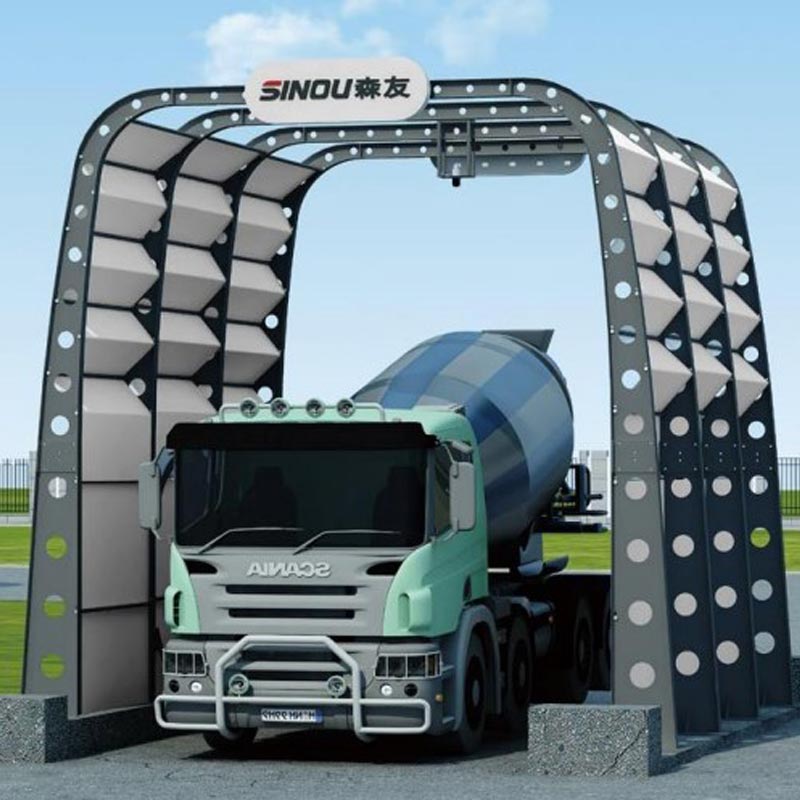
Table of Contents
- Why Mixer Truck Cleaning Is a Difficult Job
- What Is a Heavy Duty Mixer Truck Washing Machine?
- How the Washing System Works
- Key Benefits for Concrete Truck Fleets
- Important Machine Features
- Manual Washing vs. Dedicated Washing Equipment
- How to Select the Right Washing Machine
- Water Management and Environmental Performance
- Maintenance and Daily Operation
- Common Purchasing and Operating Mistakes
- Why Industrial Buyers Consider Zhejiang Sinou Environmental Protection Equipment Co., Ltd.
- Frequently Asked Questions
- Final Thoughts
Why Mixer Truck Cleaning Is a Difficult Job
Concrete mixer trucks operate in one of the most demanding environments for commercial vehicles. During transportation and discharge, wet concrete can splash onto the exterior, frame, wheels, mudguards, chute, and surrounding components. Fine cement particles may remain on surfaces even when visible concrete has already been removed.
The biggest challenge is time. Concrete residue begins to dry as soon as it is exposed to air. Once hardened, it becomes substantially more difficult to remove. A cleaning process that is manageable immediately after unloading can become a labor-intensive scraping operation several hours later.
Fleet operators therefore need a cleaning method that fits naturally into the vehicle's daily operating cycle. The objective is not simply to make a truck look clean. Effective washing should help prevent material buildup, maintain working components, improve site cleanliness, and reduce unnecessary downtime.
The Core Cleaning Pain Points
- Hardened concrete is difficult to remove manually.
- Large trucks require considerable water and labor when washed inefficiently.
- Workers may need to operate around slippery surfaces and heavy vehicles.
- Cleaning every vehicle consistently can be difficult across a large fleet.
- Concrete residue can accumulate in areas that are difficult to reach.
- Poor wastewater handling can create additional environmental and housekeeping concerns.
What Is a Heavy Duty Mixer Truck Washing Machine?
A Heavy Duty Mixer Truck Washing Machine is specialized industrial cleaning equipment developed for washing large concrete mixer trucks and other heavy-duty construction vehicles. Unlike conventional car washing equipment, it is designed around greater vehicle dimensions, heavier contamination, demanding working conditions, and frequent cleaning cycles.
The equipment typically combines a high-pressure water system with strategically positioned spray devices. Depending on the configuration, the system may include a vehicle washing platform, high-pressure pump, spray arms or nozzles, control cabinet, water collection system, recycling equipment, and auxiliary cleaning components.
The basic principle is straightforward: deliver sufficient water pressure and flow to loosen and remove concrete residue while reducing the amount of manual labor required.
Typical Applications
- Ready-mix concrete plants
- Construction companies
- Concrete delivery fleets
- Infrastructure and road construction projects
- Mining and aggregate operations
- Heavy equipment rental and service centers
- Commercial vehicle maintenance facilities
How the Washing System Works
Although machine configurations vary, the cleaning process generally follows a series of controlled steps.
- Vehicle positioning: The mixer truck enters the designated washing area and is positioned according to the equipment layout.
- Pre-rinsing: Water removes loose dust, aggregate, and wet residue from the most exposed surfaces.
- High-pressure cleaning: High-pressure spray targets concrete residue around the drum, chassis, wheels, chute, and other areas.
- Focused cleaning: Operators can direct spray toward areas with heavier contamination.
- Final rinsing: Remaining particles and slurry are flushed away.
- Water handling: Depending on the installation, wastewater can be collected, settled, treated, or recycled.
This structured process is important because it creates consistency. Instead of relying entirely on individual workers to determine how and where to wash each vehicle, a dedicated system establishes a repeatable cleaning routine.
| Component | Primary Function | Operational Value |
|---|---|---|
| High-pressure pump | Provides pressurized water | Helps remove stubborn residue |
| Spray nozzles | Direct water toward target surfaces | Improves cleaning coverage |
| Control system | Manages washing functions | Creates more consistent operation |
| Washing platform | Supports vehicle cleaning operations | Improves workflow and accessibility |
| Water treatment or recycling unit | Handles used washing water | Supports responsible water management |
Key Benefits for Concrete Truck Fleets
1. Faster Cleaning Cycles
High-pressure water can remove material more efficiently than ordinary low-pressure washing. Faster cleaning is particularly valuable for ready-mix operations where trucks need to return to service quickly.
2. Lower Dependence on Manual Labor
Manual washing often requires workers to repeatedly move around a large vehicle while handling hoses and cleaning tools. A dedicated washing system can reduce repetitive tasks and allow personnel to focus on areas that genuinely require attention.
3. More Consistent Results
A standardized washing procedure helps reduce differences between operators. Consistent cleaning is useful for companies managing multiple trucks, multiple shifts, or multiple facilities.
4. Reduced Material Buildup
Frequent removal of fresh concrete residue is generally easier than dealing with thick, hardened deposits. Regular washing can therefore support better vehicle upkeep.
5. Improved Working Conditions
A properly designed washing area can organize vehicle positioning, water delivery, drainage, and cleaning activities. This can create a more controlled environment than improvised washing arrangements.
6. Better Water Management
When washing equipment is combined with suitable collection and treatment infrastructure, wastewater can be handled in a more organized manner rather than simply being discharged without adequate control.
Important Machine Features
Not every industrial vehicle washing system is configured in the same way. Buyers should pay attention to the details that directly influence cleaning performance, reliability, and daily usability.
High-Pressure Performance
Pressure and water flow should be matched to the level of concrete contamination and the vehicle's cleaning requirements.
Heavy-Duty Construction
Frames, platforms, pumps, pipes, and fittings should be appropriate for frequent industrial use.
Practical Spray Layout
Nozzle positioning should provide useful coverage without wasting water on areas that do not require cleaning.
Simple Controls
Operators should be able to start, stop, and adjust washing functions without complicated procedures.
Drainage and Collection
The washing area should support effective drainage and, where required, wastewater collection and treatment.
Easy Maintenance
Accessible pumps, filters, valves, nozzles, and other wear components make routine service easier.
Manual Washing vs. Dedicated Washing Equipment
Manual cleaning can be appropriate for occasional use or small operations, but it becomes less practical as vehicle volume increases. The following comparison illustrates why fleet operators often consider dedicated equipment.
| Factor | Manual Washing | Dedicated Washing System |
|---|---|---|
| Labor requirement | Usually higher | Can be reduced through mechanized cleaning |
| Cleaning consistency | Depends heavily on operator | More standardized |
| Fleet scalability | Less efficient as volume grows | Better suited to repeated fleet washing |
| Water management | Often less organized | Can integrate collection and recycling |
| Initial investment | Lower | Higher, but designed for repeated use |
How to Select the Right Washing Machine
The right system depends on more than the truck's overall dimensions. Buyers should evaluate the complete operating environment before placing an order.
Fleet Size and Washing Frequency
A facility processing a few trucks per day has different requirements from a large ready-mix plant handling dozens or hundreds of vehicle movements. Estimate daily washing volume before selecting the equipment capacity.
Vehicle Dimensions
Consider truck length, width, height, wheelbase, drum configuration, and discharge chute arrangement. The washing system should provide practical access to the areas that need cleaning.
Contamination Level
Fresh concrete slurry requires a different cleaning approach from heavily hardened residue. Discuss actual operating conditions with the equipment supplier instead of selecting a system based solely on nominal specifications.
Water Supply
Check available water pressure, flow rate, storage capacity, water quality, and the possibility of recycling. These factors can directly influence system performance.
Installation Conditions
Available floor space, drainage, power supply, wastewater treatment requirements, climate, and access for heavy trucks should all be evaluated before installation.
Practical purchasing tip: Ask the supplier to evaluate your actual truck dimensions, daily washing volume, residue characteristics, available water resources, and site conditions. A system designed around real operating data is more likely to provide reliable long-term performance.
Water Management and Environmental Performance
Concrete truck washing produces water containing cement particles, aggregate fines, and other suspended solids. Effective water management should therefore be considered part of the complete washing solution rather than an afterthought.
A well-planned facility may incorporate sedimentation, collection, filtration, recycling, or other treatment stages depending on local requirements and the characteristics of the wastewater. Recycling suitable process water can also reduce dependence on fresh water, provided that the treatment process and water quality are appropriate for the intended application.
- Collect wash water in a controlled area.
- Prevent uncontrolled discharge into surrounding soil or drainage systems.
- Separate larger solids before further treatment where appropriate.
- Monitor water quality when recycled water is used.
- Maintain pumps, filters, tanks, and pipelines according to operating conditions.
- Follow applicable local environmental and wastewater requirements.
The goal is to build a cleaning workflow in which vehicle washing, wastewater handling, and routine site management work together.
Maintenance and Daily Operation
Even a robust washing machine requires routine attention. Concrete particles are abrasive, while cement residue can create deposits around equipment if cleaning is neglected.
Recommended Routine Checks
- Inspect high-pressure hoses and connections for leakage or damage.
- Check spray nozzles for blockage or uneven spray patterns.
- Inspect pump performance and unusual vibration or noise.
- Remove accumulated solids from collection areas.
- Keep electrical control components protected from unnecessary water exposure.
- Inspect valves, filters, seals, and other wear components.
- Keep the washing platform and surrounding floor free of excessive sediment.
Operators should also receive clear instructions for starting, stopping, emergency shutdown, cleaning, and basic troubleshooting. Good operating procedures can extend equipment life while helping maintain predictable cleaning performance.
Common Purchasing and Operating Mistakes
Mistake 1: Focusing Only on Initial Price
The lowest purchase price does not necessarily represent the lowest total cost. Pump durability, spare parts, maintenance, water consumption, labor requirements, and service support should also be considered.
Mistake 2: Ignoring Actual Truck Dimensions
A washing system that is too small or poorly configured can create blind spots and require additional manual cleaning.
Mistake 3: Treating Wastewater as a Secondary Issue
Cleaning equipment and wastewater management should be planned together, particularly at high-volume concrete facilities.
Mistake 4: Underestimating Cleaning Frequency
Equipment intended for occasional washing may not be suitable for intensive fleet operations. Expected daily cycles should be discussed with the manufacturer.
Mistake 5: Neglecting After-Sales Support
Industrial equipment is a long-term investment. Availability of replacement parts, technical support, installation guidance, and troubleshooting assistance can be as important as the machine itself.
Why Industrial Buyers Consider Zhejiang Sinou Environmental Protection Equipment Co., Ltd.
For companies evaluating industrial vehicle washing solutions, the supplier's engineering capability and understanding of actual operating conditions are important considerations. Zhejiang Sinou Environmental Protection Equipment Co., Ltd. focuses on environmental protection equipment and industrial cleaning solutions, providing equipment designed for demanding commercial and industrial applications.
When discussing a Heavy Duty Mixer Truck Washing Machine, buyers can benefit from communicating specific project information rather than simply requesting a standard product quotation. Truck dimensions, washing frequency, site layout, water source, wastewater requirements, and local operating conditions can all influence the final configuration.
Project Information to Prepare
- Truck type and approximate dimensions
- Number of mixer trucks in the fleet
- Average vehicles washed per day
- Expected cleaning frequency
- Available installation area
- Water supply conditions
- Power supply information
- Wastewater collection or recycling requirements
- Country or region where the equipment will be installed
Providing these details allows the supplier to better understand the application and recommend a configuration that matches the facility rather than relying on generic assumptions.
Frequently Asked Questions
What is a Heavy Duty Mixer Truck Washing Machine used for?
It is primarily used to clean concrete mixer trucks and similar heavy-duty construction vehicles. The system uses pressurized water and dedicated spray equipment to remove concrete residue, cement slurry, dirt, sand, and other contaminants.
Can the machine clean hardened concrete?
High-pressure cleaning can help remove many types of concrete residue, but heavily hardened concrete may require additional mechanical or specialized treatment. Cleaning trucks soon after use is generally easier than allowing thick deposits to cure completely.
Can washing water be recycled?
Depending on the system design and water quality requirements, wash water can potentially be collected, treated, and reused for suitable applications. The appropriate recycling process should be determined according to the wastewater characteristics and local requirements.
How often should a mixer truck be washed?
Cleaning frequency depends on the vehicle's operating cycle, material handled, weather, and fleet procedures. For concrete mixer trucks, cleaning soon after unloading is generally preferable because fresh residue is easier to remove than hardened deposits.
Is a dedicated washing machine suitable for small fleets?
It can be, but the economic value depends on washing frequency, labor costs, site requirements, and future fleet growth. A supplier can evaluate the expected usage before recommending the equipment scale.
What should buyers provide when requesting a quotation?
Useful information includes truck dimensions, fleet size, daily washing volume, available space, water supply, power conditions, wastewater requirements, and the preferred level of automation. Photos or drawings of the installation site can also help with project evaluation.
Why is regular cleaning important for mixer trucks?
Regular cleaning helps control concrete buildup, keeps working areas more manageable, supports routine maintenance, improves site cleanliness, and can reduce the effort required to remove hardened material later.
Final Thoughts
Concrete mixer trucks are essential to modern construction, but their working environment creates a demanding cleaning requirement. Cement slurry, concrete residue, aggregate, and road dirt can accumulate rapidly, turning routine vehicle washing into a time-consuming task when handled entirely by manual methods.
A properly configured Heavy Duty Mixer Truck Washing Machine provides a more structured approach. By combining high-pressure water delivery, suitable spray coverage, practical controls, durable components, and effective wastewater management, the system can help concrete fleet operators create a faster and more consistent cleaning workflow.
The most important decision is not simply selecting a machine with the highest pressure or largest capacity. The better approach is to match the washing system to the actual truck dimensions, cleaning frequency, contamination level, available utilities, installation environment, and water-management requirements.
Looking for a Heavy Duty Mixer Truck Washing Machine?
If your concrete fleet needs a more efficient and organized vehicle cleaning solution, Zhejiang Sinou Environmental Protection Equipment Co., Ltd. can help evaluate your application and discuss a suitable equipment configuration.
Contact us to discuss your truck washing requirements, site conditions, washing capacity, and customized equipment solution.
Related News
- How the Sinou ZP plunger pump reduces sludge treatment OPEX
- What Makes an Air Cooled Hydraulic Ceramic Piston Pump For Filter Press a Reliable Sludge Feeding Solution?
- What Makes a Concrete Sewage Neutralization Treatment System Effective?
- Industry News: Hydraulic Ceramic Plunger Pump Solves Long‑Distance Conveying of 40% Solid‑Content Sludge
- How Can a Vibratory Concrete Reclaimer Improve Tunnel Project Waste Management?
- Impact and Reuse of Wastewater from Concrete Batching Plants
Leave me a message