English
- English
- Español
- Português
- русский
- Français
- 日本語
- Deutsch
- tiếng Việt
- Italiano
- Nederlands
- ภาษาไทย
- Polski
- 한국어
- Svenska
- magyar
- Malay
- বাংলা ভাষার
- Dansk
- Suomi
- हिन्दी
- Pilipino
- Türkçe
- Gaeilge
- العربية
- Indonesia
- Norsk
- تمل
- český
- ελληνικά
- український
- Javanese
- فارسی
- தமிழ்
- తెలుగు
- नेपाली
- Burmese
- български
- ລາວ
- Latine
- Қазақша
- Euskal
- Azərbaycan
- Slovenský jazyk
- Македонски
- Lietuvos
- Eesti Keel
- Română
- Slovenski
- मराठी
- Srpski језик

News
What Makes a Concrete Sewage Neutralization Treatment System Effective?
Concrete production and construction activities can generate wastewater containing cement particles, suspended solids, alkaline compounds, sand, fine aggregates, and other process residues. Because this wastewater can vary significantly in pH and solids concentration, simply collecting and discharging it may create operational, environmental, and equipment-related problems.
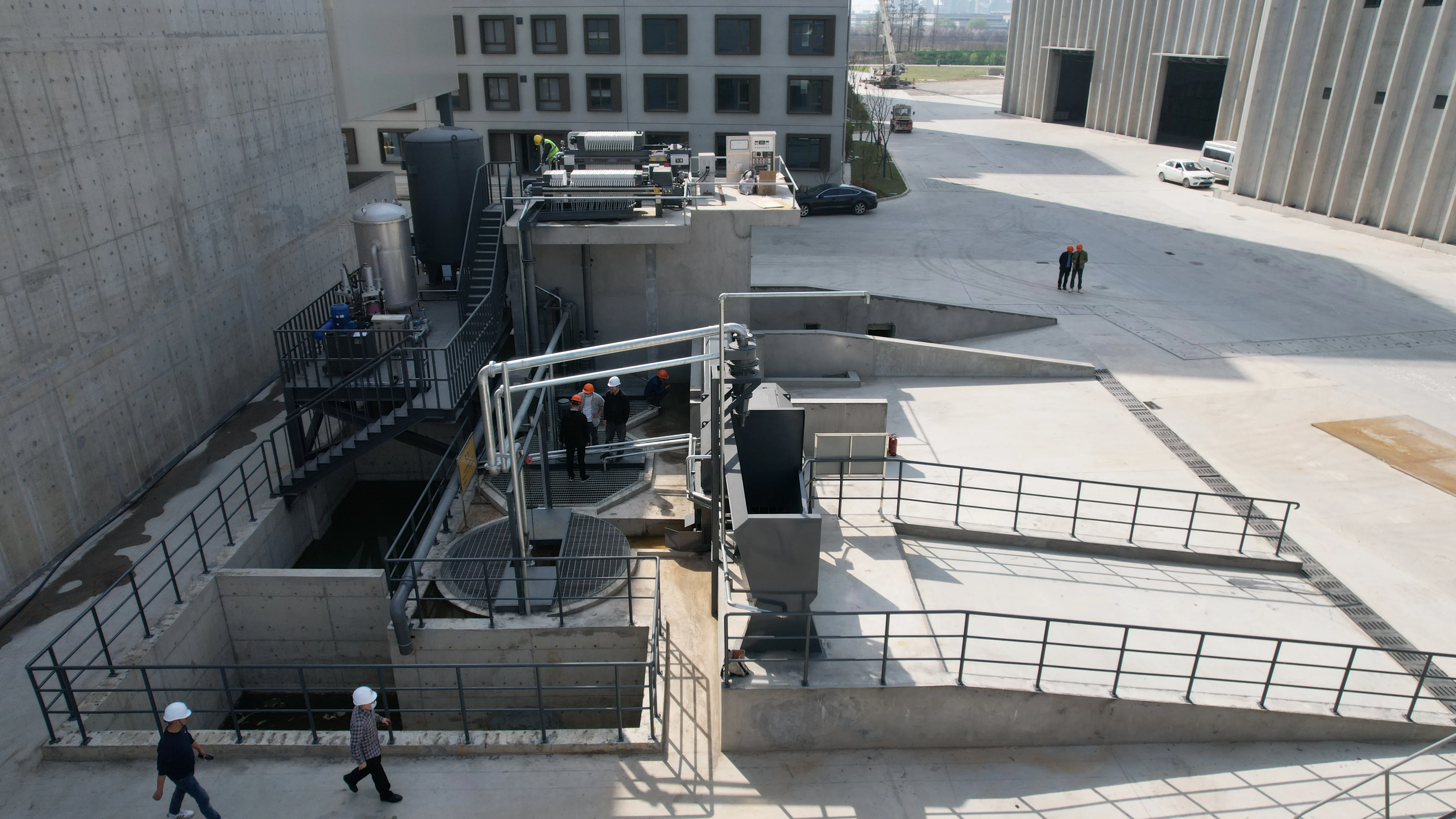
A Concrete Sewage Neutralization Treatment System is designed to provide controlled treatment before wastewater is discharged, reused, or transferred to subsequent treatment stages. By combining equalization, screening, mixing, pH monitoring, chemical dosing, sedimentation or filtration, and controlled discharge, the system can create a more stable treatment process. This article explains the major components, operating principles, common challenges, design considerations, and practical benefits of an effective system.

Table of Contents
- Why Concrete Wastewater Requires Neutralization
- What a Concrete Sewage Neutralization Treatment System Does
- How the Treatment Process Works
- Key Components of the System
- Common Wastewater Treatment Challenges
- Important System Design Considerations
- Operational Benefits for Concrete Facilities
- Concrete Wastewater Treatment Applications
- How to Evaluate a Treatment System
- Frequently Asked Questions
- Conclusion
Why Concrete Wastewater Requires Neutralization
Concrete-related wastewater is different from ordinary domestic sewage. Water generated during concrete batching, equipment washing, mixer cleaning, aggregate processing, floor cleaning, and construction-site operations may carry significant amounts of cementitious material and fine particles.
Fresh cement-based materials are generally alkaline. When process water comes into contact with cement residues, the wastewater can therefore develop a high pH. At the same time, the hydraulic flow and pollutant concentration may change throughout the working day. A system that receives only a small amount of wastewater in the morning may suddenly experience a much higher load after equipment washing or production activities.
This variability creates several practical concerns. High-pH wastewater can interfere with downstream biological processes, contribute to corrosion or scaling problems in certain conditions, and create difficulties when discharge requirements specify a defined pH range. Neutralization is therefore not simply about adding chemicals; it is about controlling the wastewater condition before the next treatment or discharge stage.
Key point: Effective neutralization begins with understanding wastewater variability. Flow rate, pH, solids concentration, temperature, and chemical characteristics should be considered together rather than treating pH as an isolated parameter.
What a Concrete Sewage Neutralization Treatment System Does
A Concrete Sewage Neutralization Treatment System provides a controlled process for adjusting wastewater characteristics before discharge, reuse, or further treatment. The exact configuration depends on the wastewater source, flow rate, pollutant concentration, required discharge quality, and local regulations.
At the center of the system is controlled pH adjustment. If the wastewater is excessively alkaline, an appropriate acidic reagent can be introduced under controlled conditions. If the wastewater becomes acidic, an alkaline reagent may be required. The treatment objective is not necessarily to force every stream to exactly pH 7. Instead, the target should be established according to the downstream process and applicable discharge requirements.
For concrete wastewater, neutralization may also be closely connected with solids separation. As pH changes, some dissolved or suspended substances may change their physical or chemical behavior. Therefore, a practical system often combines pH adjustment with screening, settling, filtration, sludge collection, or other separation processes.
How the Treatment Process Works
Although individual systems vary, an effective treatment sequence can be organized into several basic stages.
1. Wastewater Collection
Wastewater from concrete production, washing, cleaning, or construction activities is directed into a controlled collection point.
2. Screening
Large particles, debris, aggregate fragments, and other coarse materials can be removed before the water enters sensitive equipment.
3. Equalization
An equalization tank helps reduce sudden changes in flow and pollutant concentration, creating more stable conditions for subsequent treatment.
4. pH Adjustment
pH sensors provide process information while controlled dosing equipment introduces acid or alkaline chemicals as required.
5. Mixing and Reaction
Mechanical mixing promotes rapid contact between wastewater and treatment chemicals and helps prevent localized chemical concentrations.
6. Separation and Discharge
After pH adjustment, suspended materials can be settled, filtered, or otherwise separated before the treated water is discharged or reused.
The sequence is important because neutralization is more reliable when the wastewater has already been screened and its flow has been stabilized. In applications with highly variable wastewater, multiple treatment stages may provide better control than a single dosing point.
Key Components of the System
A well-engineered system combines mechanical, chemical, electrical, and control components. Each component contributes to process stability.
| Component | Main Function | Important Consideration |
|---|---|---|
| Collection Tank | Receives wastewater | Capacity and material compatibility |
| Equalization Tank | Balances flow and concentration | Retention time and mixing |
| pH Sensor | Measures wastewater pH | Calibration, placement, and maintenance |
| Dosing Pump | Controls chemical addition | Chemical compatibility and dosing accuracy |
| Mixer | Promotes uniform reaction | Mixing intensity and tank geometry |
| Settling / Filtration Unit | Removes suspended material | Solids loading and cleaning requirements |
| Control Panel | Coordinates automated operation | Alarm functions, interlocks, and monitoring |
Common Wastewater Treatment Challenges
Many wastewater treatment problems do not originate from the neutralization reaction itself. They arise from inaccurate wastewater characterization, inadequate mixing, poor sensor maintenance, inappropriate chemical selection, or insufficient capacity.
- Rapid pH fluctuations: Concrete washing and production schedules can create sudden changes in wastewater characteristics.
- High suspended solids: Cement particles and fine aggregates can accumulate in tanks, pumps, pipes, and filters.
- Inconsistent chemical dosing: Fixed-rate dosing may be unsuitable when wastewater composition changes continuously.
- Poor mixing: Inadequate agitation can create localized high or low pH zones and unreliable sensor readings.
- Sensor fouling: Suspended solids and deposits may affect measurement accuracy if probes are not properly installed and maintained.
- Sludge accumulation: Solids separated during treatment require an appropriate collection and disposal strategy.
- Corrosion and material compatibility: Tanks, pipes, pumps, valves, and dosing equipment should be selected according to the chemical environment.
Practical lesson: A treatment system should be designed around the actual wastewater profile rather than relying on a generic equipment configuration.
Important System Design Considerations
Before selecting equipment, operators and engineers should establish the basic operating conditions. A useful project data sheet should include the following information:
- Average and peak wastewater flow rate.
- Minimum, average, and maximum pH.
- Suspended solids concentration.
- Wastewater temperature range.
- Expected production schedule and batch discharge patterns.
- Required treated-water quality.
- Potential contaminants other than cement-based solids.
- Available installation space.
- Preferred operating mode, such as batch or continuous treatment.
- Local discharge or reuse requirements.
Equalization capacity deserves particular attention. If wastewater arrives in short, high-volume batches, a properly sized equalization stage can prevent the neutralization equipment from receiving an uncontrolled hydraulic or chemical shock.
Mixing design is equally important. The objective is to distribute treatment chemicals rapidly and uniformly without creating excessive turbulence, unnecessary energy consumption, or sediment accumulation.
Instrumentation should also be considered from the beginning. A pH sensor is only useful when it is installed at an appropriate location, maintained correctly, and integrated into a control strategy that reflects the actual process response.
Operational Benefits for Concrete Facilities
When properly designed and operated, a concrete wastewater neutralization system can provide several practical benefits.
Stable pH
Controlled pH adjustment supports more consistent downstream treatment and discharge management.
Better Water Management
Treated water may be suitable for appropriate reuse applications when quality requirements are satisfied.
Reduced Process Risk
Controlled treatment helps reduce problems caused by sudden wastewater fluctuations.
The value of the system extends beyond the neutralization tank itself. A coordinated process can make wastewater handling more predictable, simplify routine operation, and provide operators with clearer information about system performance.
Concrete Wastewater Treatment Applications
A Concrete Sewage Neutralization Treatment System can be adapted to different wastewater sources where pH control and solids management are required.
| Application | Typical Treatment Concern | Potential Treatment Focus |
|---|---|---|
| Concrete Batching Plants | Cement-rich wastewater | Equalization, pH control, solids separation |
| Ready-Mix Concrete Facilities | Mixer and equipment wash water | Screening, settling, neutralization |
| Construction Sites | Variable flow and intermittent discharge | Temporary collection and controlled treatment |
| Precast Concrete Production | Process washing and cement residues | pH adjustment and suspended-solid removal |
| Concrete Equipment Cleaning | High solids and batch discharge | Screening, equalization, settling and neutralization |
How to Evaluate a Treatment System
Purchasing wastewater equipment should not begin with tank size or pump capacity alone. The most important question is whether the complete system can respond to the facility's actual wastewater conditions.
- Process adaptability: Can the system handle variations in wastewater flow and pH?
- Measurement reliability: Are pH monitoring points positioned correctly for representative readings?
- Chemical control: Can dosing be adjusted according to real-time process conditions?
- Solids management: Is there a practical method for collecting and removing accumulated solids?
- Material selection: Are tanks, pumps, valves, pipes, and sensors compatible with the wastewater and treatment chemicals?
- Automation: Can operators monitor pH, pump status, alarms, tank levels, and other important parameters?
- Maintenance: Are sensors, pumps, filters, and mixers easy to inspect and service?
- Customization: Can the equipment layout and treatment sequence be adjusted to match the facility?
For an industrial project, engineering support is particularly valuable when wastewater characteristics are uncertain. Sampling, laboratory testing, pilot evaluation, and process calculations can help determine the appropriate treatment configuration before full-scale installation.
Why Engineering Details Matter
Two facilities may both describe their wastewater as “concrete sewage,” yet their flow patterns, solids loading, pH characteristics, site limitations, and discharge objectives can be very different. The treatment system should therefore be engineered around the specific application rather than selected only by nominal capacity.
Frequently Asked Questions
Can concrete wastewater be discharged without neutralization?
This depends on its actual characteristics and the applicable discharge requirements. If the wastewater falls outside the permitted pH range or contains excessive suspended solids, treatment may be required before discharge. The local regulatory or receiving-system requirements should always be checked for the specific site.
Does neutralization remove cement particles?
Neutralization primarily controls acidity or alkalinity. It should not be regarded as a complete solids-removal process. Concrete wastewater commonly requires additional screening, settling, clarification, filtration, or other separation methods to manage cement particles and suspended solids.
Which chemicals are used for wastewater neutralization?
The chemical depends on the wastewater condition and the target treatment result. Acidic wastewater may require an alkaline reagent, while alkaline wastewater may require an acidic reagent. Chemical selection should consider reaction characteristics, safety, storage, cost, material compatibility, and resulting by-products.
Why is an equalization tank useful?
Equalization helps moderate variations in wastewater flow and pollutant concentration. This can make downstream chemical dosing and treatment more stable, particularly when wastewater is generated intermittently or in batches.
Can the treated water be reused?
Potentially, depending on the treated-water quality and intended application. Reuse should be based on appropriate water-quality testing and the requirements of the proposed reuse process. Neutralization alone does not guarantee that water is suitable for every reuse purpose.
Is automatic pH control necessary?
Automatic control can be particularly useful where wastewater characteristics change frequently. A feedback system can use measured pH to regulate chemical dosing, while alarms and interlocks can provide additional operational protection. The appropriate level of automation depends on the process and operating conditions.
Can the system be customized for different concrete facilities?
Yes. Treatment capacity, tank configuration, chemical dosing, mixing, solids separation, instrumentation, control systems, and installation layout can be configured according to the facility's wastewater characteristics and site requirements.
Conclusion
A Concrete Sewage Neutralization Treatment System is more than a chemical dosing unit. It is an integrated wastewater management process designed to control pH, stabilize wastewater conditions, manage suspended solids, protect downstream equipment, and support responsible discharge or reuse.
The most reliable approach begins with a clear understanding of the wastewater source, flow pattern, pH variation, solids concentration, treatment objective, and site conditions. Equalization, accurate monitoring, appropriate mixing, controlled chemical dosing, and effective solids separation should work together as one process.
Zhejiang Sinou Environmental Protection Equipment Co., Ltd. focuses on wastewater treatment equipment and customized environmental protection solutions for different industrial applications. For concrete-related wastewater projects, the appropriate configuration can be developed around actual wastewater characteristics, treatment capacity, installation conditions, and operational requirements.
Share your wastewater flow, pH range, solids characteristics, treatment capacity, and project requirements with Zhejiang Sinou Environmental Protection Equipment Co., Ltd. A customized treatment approach can then be developed around your actual operating conditions. Contact Us.
Related News
- Industry News: Hydraulic Ceramic Plunger Pump Solves Long‑Distance Conveying of 40% Solid‑Content Sludge
- How Can a Vibratory Concrete Reclaimer Improve Tunnel Project Waste Management?
- How Does a Heavy Duty Mixer Truck Washing Machine Improve Concrete Fleet Cleaning?
- Impact and Reuse of Wastewater from Concrete Batching Plants
- CO₂‑Based Neutralization — A Safer Alternative for Alkaline Wastewater Treatment at Concrete Batching Plants
- How Can Automatic Mixer Truck Washing Machine Improve Cleaning Efficiency and Reduce Operating Costs?
Leave me a message