English
- English
- Español
- Português
- русский
- Français
- 日本語
- Deutsch
- tiếng Việt
- Italiano
- Nederlands
- ภาษาไทย
- Polski
- 한국어
- Svenska
- magyar
- Malay
- বাংলা ভাষার
- Dansk
- Suomi
- हिन्दी
- Pilipino
- Türkçe
- Gaeilge
- العربية
- Indonesia
- Norsk
- تمل
- český
- ελληνικά
- український
- Javanese
- فارسی
- தமிழ்
- తెలుగు
- नेपाली
- Burmese
- български
- ລາວ
- Latine
- Қазақша
- Euskal
- Azərbaycan
- Slovenský jazyk
- Македонски
- Lietuvos
- Eesti Keel
- Română
- Slovenski
- मराठी
- Srpski језик

News
How Can a Vibratory Concrete Reclaimer Improve Tunnel Project Waste Management?
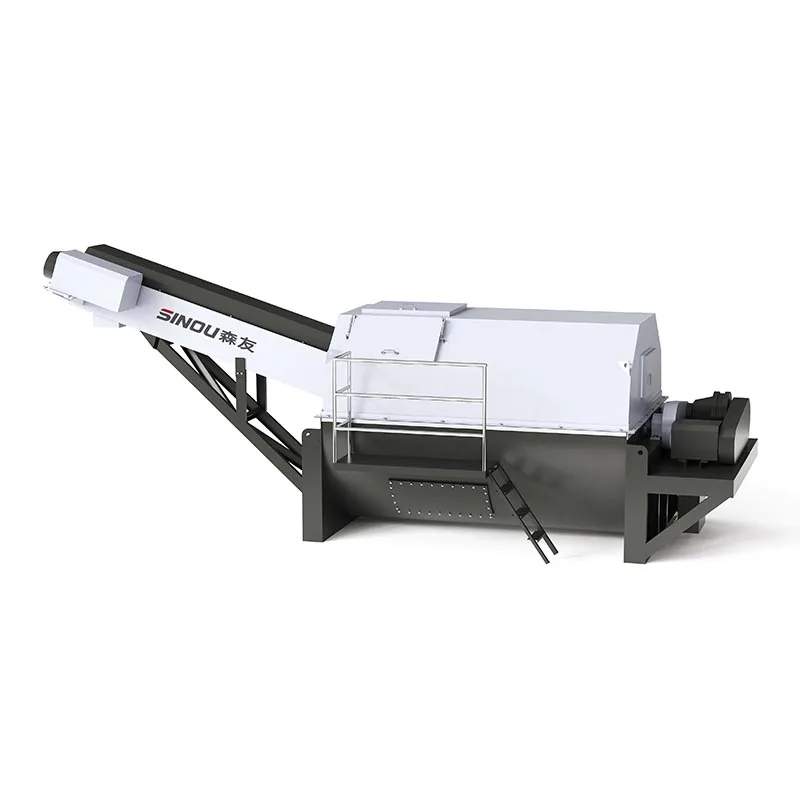
Tunnel construction generates large quantities of leftover concrete, slurry, aggregate, and cement-rich wastewater. Without an efficient recovery system, these materials can increase disposal costs, occupy valuable site space, create environmental risks, and reduce the recovery of reusable resources. A vibratory concrete reclaimer for tunnel projects provides a practical solution by separating coarse aggregate, fine particles, and water from returned concrete and construction slurry. This article explains how vibratory reclaiming technology works, the major challenges faced by tunnel contractors, key equipment considerations, operational benefits, and how an integrated recycling approach can improve project efficiency and environmental performance.
Article Outline
- Why Tunnel Projects Generate So Much Concrete Waste
- How a Vibratory Concrete Reclaimer Works
- The Main Waste Management Problems It Solves
- Key Benefits for Tunnel Construction
- Important Components of a Reclaiming System
- How to Choose the Right Vibratory Concrete Reclaimer
- Recommended Workflow for Tunnel Concrete Recycling
- Where Vibratory Reclaimers Fit in Tunnel Projects
- Traditional Disposal vs. Concrete Reclaiming
- Operation and Maintenance Considerations
- Frequently Asked Questions
- Building a More Efficient Tunnel Waste Management System
Why Tunnel Projects Generate So Much Concrete Waste
Tunnel construction is one of the most demanding applications for concrete production, transportation, placement, and recovery. Unlike many conventional construction sites, tunnel projects often operate continuously and within confined environments. Concrete may be used for tunnel lining, shotcrete applications, structural sections, foundations, drainage structures, road surfaces, and other supporting infrastructure.
During these operations, a certain amount of material inevitably becomes surplus. Concrete remaining inside mixer trucks, pump lines, delivery equipment, batching systems, or temporary storage areas must be handled before it hardens. At the same time, washing operations generate water containing cement particles, sand, and fine aggregates.
If this material is simply discharged or transported away, contractors may face several problems:
- Increasing costs for waste collection and transportation.
- Loss of potentially reusable aggregate.
- Large volumes of slurry and wash water.
- Additional pressure on limited tunnel-site storage areas.
- Potential contamination caused by uncontrolled cement-rich wastewater.
- Higher demand for newly purchased raw materials.
For large tunnel projects, even relatively small quantities of waste generated during each concrete delivery can accumulate into a substantial volume over the construction period. This makes concrete recovery an important part of modern site management rather than an optional afterthought.
How a Vibratory Concrete Reclaimer Works
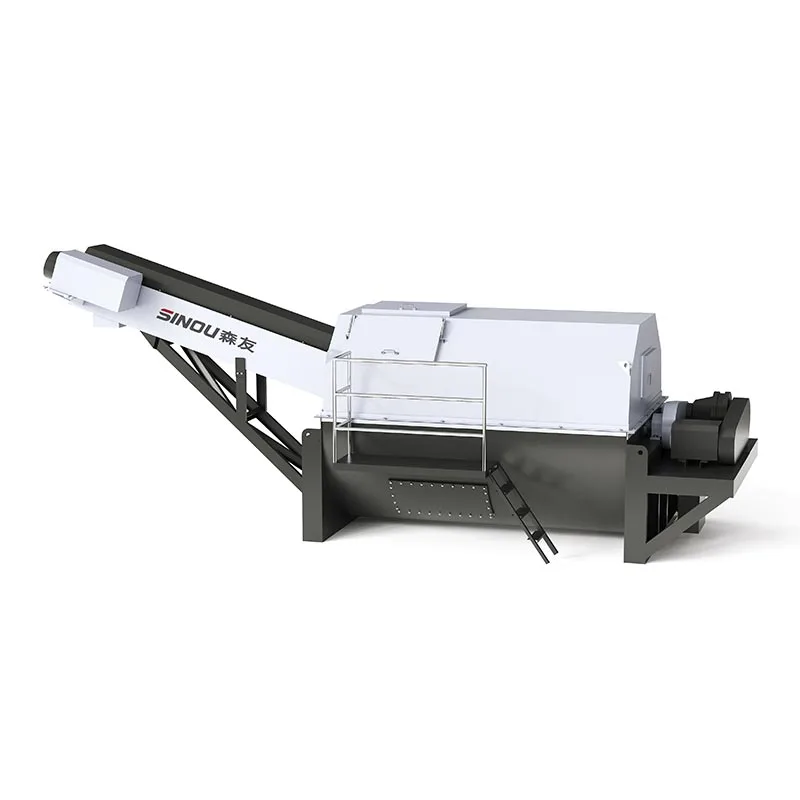
A vibratory concrete reclaimer is designed to recover valuable components from returned concrete and concrete-containing wastewater. Its core function is based on controlled vibration, screening, separation, and washing.
When residual concrete enters the reclaiming system, vibration helps move the material through a screening or separation structure. Larger aggregate particles can be separated from cement slurry and finer particles. Depending on the system configuration, recovered aggregate can then be collected for appropriate reuse, while water and fine solids are processed separately.
A typical operating process can be represented as:
- Collection: Returned concrete, slurry, or equipment wash water is directed to the receiving point.
- Feeding: The material enters the reclaimer at a controlled rate.
- Vibratory separation: Vibration promotes continuous material movement and screening.
- Aggregate recovery: Coarse particles are separated and discharged for collection.
- Fine-particle management: Cement-rich fines remain in the slurry stream or move to a subsequent treatment stage.
- Water recovery: Recovered water can potentially be managed or reused according to the project's process requirements and applicable standards.
- Final handling: Separated solids and water are transferred to their respective storage or treatment systems.
This separation-based approach is particularly useful where a tunnel project requires continuous concrete production and has limited space for waste handling.
The Main Waste Management Problems It Solves
The value of a vibratory concrete reclaimer is not limited to separating concrete. Its greater purpose is to address the operational problems created by concrete waste.
| Tunnel Project Challenge | Potential Impact | Reclaimer-Based Solution |
|---|---|---|
| Returned concrete | Material loss and disposal costs | Separates recoverable aggregate and slurry |
| Concrete truck washing | Large volumes of cement-rich wastewater | Supports controlled slurry separation and recovery |
| Limited site space | Waste storage becomes difficult | Reduces uncontrolled accumulation of concrete waste |
| Aggregate consumption | Higher raw-material demand | Allows suitable recovered aggregate to be collected |
| Continuous construction | Waste handling can interrupt operations | Provides a more systematic processing workflow |
| Environmental management | Uncontrolled discharge can create compliance risks | Creates a structured pathway for slurry and water handling |
By treating waste as a recoverable material stream, contractors can move from a disposal-focused model toward a resource-management model.
Key Benefits for Tunnel Construction
1. Better Aggregate Recovery
Returned concrete contains aggregate that may still have value. Instead of allowing this material to become mixed waste, a reclaiming system can separate larger particles for collection and potential reuse where technically and locally appropriate.
This can reduce the amount of virgin aggregate required by certain project processes and improve overall material utilization.
2. Reduced Waste Transportation
Transporting wet concrete waste away from a tunnel construction site can be expensive and logistically complicated. The combination of heavy material, frequent truck movements, and limited access routes can create unnecessary operational pressure.
Processing concrete waste closer to its source can reduce the volume of material requiring external disposal and simplify site logistics.
3. More Controlled Water Management
Concrete washing produces water containing cement particles and suspended solids. Discharging such water without appropriate control can create environmental and operational problems.
A reclaiming system provides a defined process for collecting and separating these streams, making it easier for contractors to integrate concrete waste management into the wider site water-management strategy.
4. Improved Material Utilization
Concrete production requires cement, aggregates, water, transportation, energy, and labor. Losing usable material after each delivery reduces the efficiency of the entire production chain.
Recovery systems help contractors make better use of materials that would otherwise become waste.
5. Cleaner and More Organized Work Areas
Tunnel projects frequently operate under difficult spatial conditions. Uncontrolled concrete residues can quickly create blocked work areas, difficult cleaning conditions, and additional safety concerns.
A dedicated reclaimer creates a designated processing point and helps keep concrete waste away from general work zones.
Important Components of a Reclaiming System
A reliable vibratory concrete reclaimer for tunnel projects should be considered as part of a complete processing system rather than as an isolated machine.
- Receiving hopper: Accepts returned concrete and slurry from trucks or cleaning operations.
- Vibratory screening unit: Uses controlled vibration to move and separate materials.
- Aggregate discharge section: Directs recovered coarse material toward collection points.
- Slurry handling system: Manages cement-rich water and fine particles.
- Water recovery or treatment section: Supports controlled management of process water.
- Control system: Helps operators monitor and adjust equipment operation.
- Storage tanks or settling equipment: Provides additional capacity for water and fine solids when required.
The actual configuration should be adapted to concrete volume, aggregate characteristics, site layout, washing procedures, and downstream reuse requirements.
How to Choose the Right Vibratory Concrete Reclaimer
Equipment selection should begin with the project's actual waste profile rather than simply focusing on machine specifications.
| Selection Factor | What to Evaluate |
|---|---|
| Concrete volume | Expected daily and peak returned-concrete quantity |
| Aggregate size | Maximum and typical aggregate dimensions entering the system |
| Material consistency | Concrete mix characteristics and slurry concentration |
| Site conditions | Available footprint, access routes, drainage, and installation environment |
| Processing capacity | Whether the equipment can handle normal and peak workloads |
| Automation | Required level of automatic feeding, monitoring, and control |
| Maintenance | Ease of cleaning, inspection, component replacement, and servicing |
| Downstream use | How recovered aggregate, solids, and water will be managed |
For large-scale tunnel projects, it is especially important to consider peak production conditions. A system sized only for average output may become a bottleneck when multiple concrete deliveries arrive within a short period.
Recommended Workflow for Tunnel Concrete Recycling
An efficient recycling strategy starts before the first batch of concrete reaches the tunnel site.
- Measure the waste stream: Estimate returned concrete, wash water, slurry, and aggregate quantities.
- Map the site: Identify the most practical location for receiving, processing, storage, and discharge.
- Separate waste sources: Keep concrete residues and other incompatible construction waste from entering the same stream.
- Install the reclaiming equipment: Position the reclaimer where concrete trucks and cleaning operations can access it efficiently.
- Establish collection procedures: Train operators to direct returned concrete and wash water into the appropriate system.
- Monitor operation: Check feed volume, separation performance, vibration condition, and material discharge.
- Manage recovered materials: Define clear procedures for aggregate, solids, and water after separation.
- Review performance: Compare recovered material, waste volume, operating costs, and maintenance requirements over time.
This workflow helps transform equipment installation into a complete operational process.
Where Vibratory Reclaimers Fit in Tunnel Projects
Vibratory concrete reclaiming technology can support various stages of underground and tunnel construction.
- Tunnel lining projects: Handles residual concrete associated with lining operations.
- Shotcrete operations: Supports management of concrete-containing residues and cleaning water.
- TBM-related construction support: Can be integrated into concrete logistics around tunnel boring operations where suitable.
- Underground infrastructure: Useful for stations, shafts, access structures, and underground service areas.
- Large batching plants: Can be positioned near concrete production and vehicle-washing areas.
- Long-duration projects: Provides a systematic approach to recurring concrete waste generation.
The system can be particularly valuable when the project operates continuously and concrete waste is generated every day for months or years.
Traditional Disposal vs. Concrete Reclaiming
| Aspect | Traditional Disposal | Vibratory Reclaiming Approach |
|---|---|---|
| Material flow | Waste is collected and removed | Materials are separated and recovered |
| Aggregate utilization | Potentially lost with waste | Recoverable aggregate can be collected |
| Water management | May require separate handling | Integrated into the recovery process |
| Transportation | More waste may require off-site movement | Can reduce the volume requiring disposal |
| Site organization | Waste accumulation can become a problem | Dedicated processing area improves organization |
| Resource efficiency | Primarily disposal-oriented | Recovery-oriented |
The objective is not necessarily to reuse every recovered material in every application. Instead, the goal is to create a controlled system that separates useful resources and gives project managers more options for responsible material handling.
Operation and Maintenance Considerations
Heavy-duty tunnel construction places demanding conditions on equipment. Concrete particles, cement slurry, vibration, dust, moisture, and continuous operation can all affect machinery performance.
Several maintenance practices can help maintain reliable operation:
- Inspect vibrating components and structural connections regularly.
- Remove accumulated concrete before it hardens around critical components.
- Check screens and separation surfaces for wear or blockage.
- Monitor motors, bearings, and drive components.
- Inspect slurry pipelines, tanks, and discharge points.
- Keep electrical and control components protected from excessive moisture.
- Establish preventive maintenance intervals based on actual operating hours.
- Train operators to identify abnormal vibration, noise, leakage, or material flow.
Preventive maintenance is particularly important for tunnel projects because equipment downtime can affect an interconnected chain of concrete production, transportation, placement, and site cleaning.
Frequently Asked Questions
What is a vibratory concrete reclaimer?
A vibratory concrete reclaimer is equipment designed to separate recoverable aggregate and other components from returned concrete and concrete-containing slurry. It uses controlled vibration and screening to facilitate continuous material separation.
Why is a reclaimer useful for tunnel construction?
Tunnel projects can generate substantial quantities of returned concrete and washing water while operating in confined spaces. A reclaimer provides a centralized and more systematic way to process these materials, helping reduce uncontrolled waste accumulation and improve resource utilization.
Can recovered aggregate be reused?
Recovered aggregate may be suitable for certain applications depending on its physical characteristics, contamination level, project specifications, and applicable regulations. The intended reuse should always be evaluated according to the requirements of the specific project.
Does a concrete reclaimer handle wastewater?
Many reclaiming systems are designed to work with water and cement-containing slurry generated during concrete recovery and equipment washing. The exact water-treatment and recovery configuration depends on the system design and project requirements.
What capacity should a tunnel project choose?
The appropriate capacity depends on concrete production, peak delivery frequency, returned-concrete volume, washing frequency, and expected slurry generation. Capacity should be based on peak operating conditions rather than average daily production alone.
Can a reclaimer be integrated with a concrete batching plant?
Yes. A concrete reclaiming system can be incorporated into the material and wastewater management workflow of a batching plant. Integration can make it easier to collect returned concrete and truck-washing water at the point where they are generated.
What should contractors consider before installation?
Key considerations include processing capacity, material characteristics, site footprint, truck access, electrical requirements, drainage, storage capacity, maintenance access, recovered-material handling, and the project's environmental management procedures.
Building a More Efficient Tunnel Waste Management System
Tunnel construction requires more than high-performance concrete production and placement. Efficient management of the materials left behind after these operations can have a direct influence on site organization, resource utilization, logistics, and operating costs.
A vibratory concrete reclaimer for tunnel projects provides a practical way to move from simple waste disposal toward controlled material recovery. By separating aggregate, slurry, fine solids, and water, the system can help contractors manage recurring concrete residues in a more organized manner.
The most effective solution, however, is not simply choosing a machine with a high processing capacity. Contractors should consider the entire material flow—from concrete production and transportation to recovery, storage, water management, maintenance, and potential reuse. A properly designed system can then become an integral part of the tunnel project's construction workflow.
Zhejiang Sinou Environmental Protection Equipment Co., Ltd. focuses on environmental equipment solutions designed to support more efficient material and waste management processes. For tunnel contractors, concrete producers, infrastructure developers, and engineering companies, selecting equipment according to actual site conditions is an important step toward building a reliable recovery system.
Planning a tunnel concrete recycling system?
If you are evaluating a vibratory concrete reclaimer for tunnel projects, consider your concrete volume, aggregate size, slurry characteristics, site layout, operating schedule, and material recovery goals before selecting equipment. Contact us to discuss your project requirements and explore a suitable concrete reclaiming solution for your application.
Related News
- How the Sinou ZP plunger pump reduces sludge treatment OPEX
- What Makes an Air Cooled Hydraulic Ceramic Piston Pump For Filter Press a Reliable Sludge Feeding Solution?
- What Makes a Concrete Sewage Neutralization Treatment System Effective?
- Industry News: Hydraulic Ceramic Plunger Pump Solves Long‑Distance Conveying of 40% Solid‑Content Sludge
- How Does a Heavy Duty Mixer Truck Washing Machine Improve Concrete Fleet Cleaning?
- Impact and Reuse of Wastewater from Concrete Batching Plants
Leave me a message